
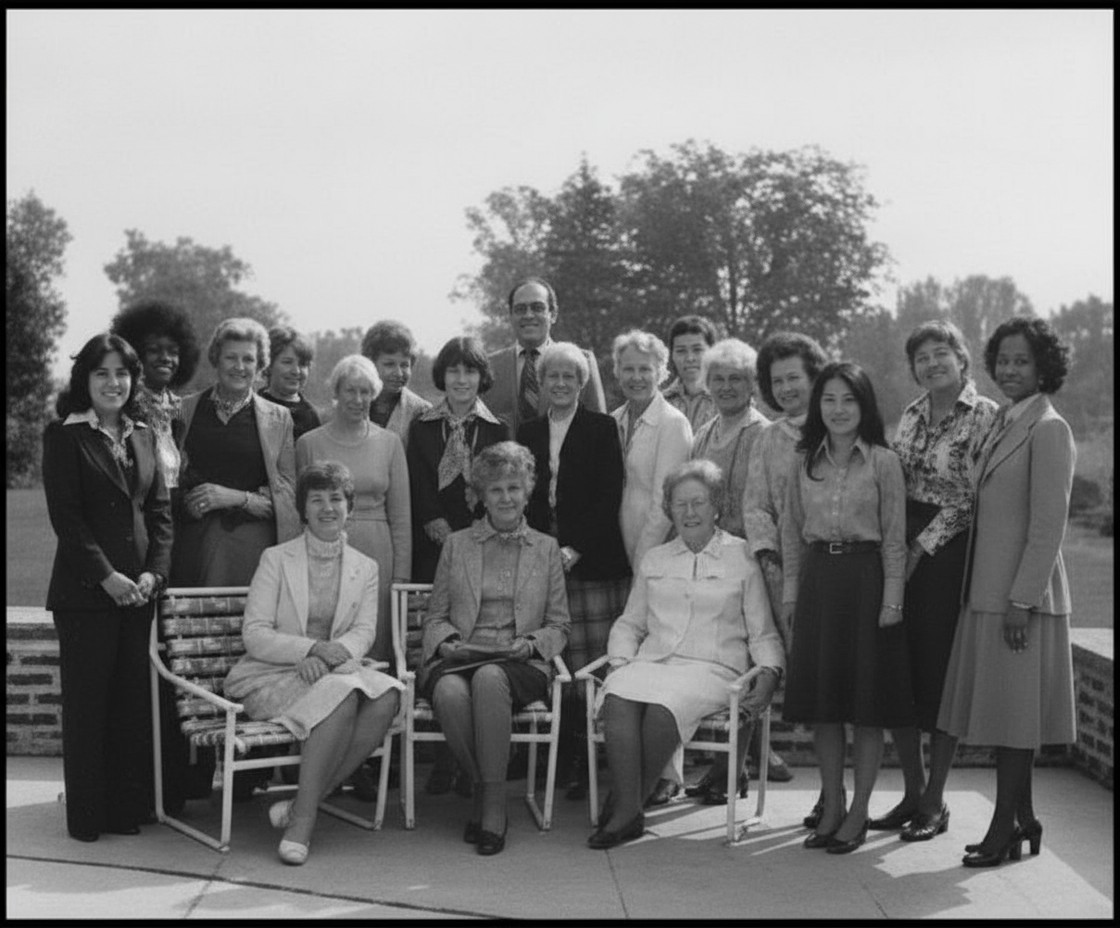
They Built Their Own Table: The Story of The Women’s Bank, 1978
In a world where rules weren’t written for every person, eight women in Denver chose to write their own. In 1978, Carol Green, Judi Wagner, B. LaRae Orullian, Gail Schoettler, Wendy Davis, Joy Burns, Beverly Martinez, and Edna Mosley did something the system wasn’t designed for—they built a bank.
The Problem: Financial Inequality Was the Norm
-
Even though the **Equal Credit Opportunity Act** passed in 1974, many women didn’t know about it—or banks simply ignored it. ([Denver Public Library][1])
-
Women were routinely asked to get a husband’s, father’s, brother’s, or some male relative’s co-signature to open credit, get loans, or even take out a mortgage. ([The Story Exchange][2])
-
Being single, divorced, or widowed often meant being treated as a financial risk, regardless of one’s income, savings, or ability. The system wasn’t neutral or fair. ([The Story Exchange][2])
- These weren’t small, isolated frustrations—they were structural barriers that limited women’s independence and opportunity. For entrepreneurs, homeowners, or anyone trying to build something, this was a ceiling they had to smash through.
The Response: Entrepreneurship in Action
These eight women didn’t just complain. They organized. They mobilized. They acted.
-
They formed a group (initially called *The Women’s Association* in 1975) to pursue the charter for a bank that would serve women and all people equitably. ([Denver Public Library][1])
-
They pooled resources and risk: each founding woman put in **\$1,000**—not to open accounts as customers, but to build the institution itself. ([The Story Exchange][2])
-
They navigated regulatory complexity, negotiated with federal agencies, and applied for a **national bank charter**—a major undertaking, especially given the entrenched norms of banking leadership being male-dominated. ([Denver Public Library][1])
Breaking Through: Opening Day & Beyond
-
On **July 14, 1978**, The Women’s Bank in Denver opened its doors in the Equitable Building. It was the second nationally chartered women’s bank in the country. ([Denver Public Library][1])
-
The response was immediate and massive. The line to get in stretched around the block. By the end of its first day, the bank had taken in **more than \$1 million in deposits**. ([Denver Public Library][1])
-
The bank didn’t just serve women—it served “all people”—but its mission was clear: to give women control over their own money, to be able to walk into a bank and open credit, to own financial decision making. ([Denver Public Library][1])Navigating Obstacles: Norms, Skepticism, and Risk
Of course, launching something like this was not without pushback and challenge:
-
Social norms were deeply entrenched. Many people believed that financial matters were “for the men,” that women couldn’t manage business decisions, or that their income was somehow secondary. Overcoming prejudice—implicit and explicit—was part of the work. ([The Story Exchange][2])
-
Institutional inertia: regulators, banks, and other gatekeepers weren’t always welcoming. Getting a bank charter, getting trust from depositors—all required proving legitimacy in a system biased against you.
-
Financial risk: raising money, meeting regulatory capital requirements, ensuring safe practices—all these are hard when there’s little margin for error. But the founders managed to do so. By 1982, The Women’s Bank had grown to **\$20 million in deposits** and maintained delinquency rates well below national averages. ([Denver Public Library][1])
Why This Beats Complaints—Entrepreneurship as Solution
This story stands out as a powerful model for how entrepreneurial thinking solves problems:
- **Identify the root barrier** – Recognizing that it wasn’t just individual banks, but the norms and rules that made women second-class financial actors.
- **Coalesce a community** – These were business leaders, activists, community builders who shared the conviction that change was possible and deserved.
- **Take ownership** – Rather than waiting for change, the founders built the institution themselves. They didn’t just want reforms; they wanted a vehicle of change they controlled.
- **Show success** – By exceeding expectations in deposits, by maintaining low delinquency, and by winning trust, they demonstrated that “women-friendly” or “women-led” banking was not just moral or just; it was smart business.
- Change the narrative** – By proving competence, by being visible, by serving education and outreach, they shifted how people thought about women, banks, risk, leadership.
Legacy: Power, Not Just Access
Because of what these women established:
-
Millions of women today can open credit cards, loans, accounts without needing any male co-signature. What seems ‘normal’ today was very hard fought
-
The Women’s Bank’s founding and success pushed other institutions to change policies, practices, even underwriting standards.
-
It remains a beacon for entrepreneurs: you can build around injustice; you can create alternatives; you don’t need to wait for permission to serve unmet needs
What Today’s Entrepreneurs Can Learn
-
Start with a problem you know deeply.** The founders of The Women’s Bank had lived the problem: finance that didn’t recognize their rights or identities.
-
Don’t assume you need full permission—create it yourself.** The best solution sometimes is to build new institutions or businesses when existing ones aren’t responsive.
-
Gather the right people.** Founders with different skills—business experience, activism, leadership, community ties—made this possible.
-
Build credibility and trust.** Handling money, regulatory rules, customer expectations—all require proving yourself. Success feeds legitimacy; legitimacy enables further success.
-
Balance ideals with discipline.** They held firm to the mission (financial independence for women), but also engaged in the hard, technical work of banking: audits, regulation, prudent lending.
Conclusion
The Women’s Bank in Denver is more than a bank’s founding story. It’s a blueprint for entrepreneurial courage: seeing a structural problem, refusing to accept limitations, pooling resources and risk, and building something that changes what people believe is possible.
In doing so, Carol Green, Judi Wagner, LaRae Orullian, Gail Schoettler, Wendy Davis, Joy Burns, Beverly Martinez, Edna Mosley—and many others—didn’t just create a financial institution. They helped shift a society’s understanding of what fairness, access, and power look like.